
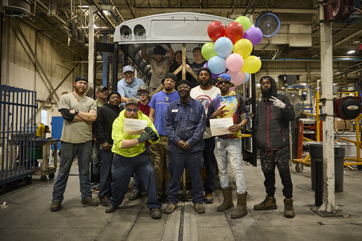

An inside look at how Peach State Truck Centers is building a stronger business by investing in its people.
By Gary Carlisle, General Manager of Thomas Bus of Georgia, a division of Peach State Truck Centers
Today’s heavy-truck and bus sales marketplace is constantly changing. Customers have more complex needs, higher expectations and less time than ever before. At…
In today’s school transportation environment, fuel decisions are no longer just about vehicle preference. They are shaped by regulation, infrastructure, funding, operations, and community expectations—often all at once.
At the recent Green Bus Summit panel discussion at STN Expo East, “Let’s Talk Fuels: What Legislative Uncertainty Means for School Transportation,” one theme…
In today’s rapidly changing fleet management environment, navigating the costs and benefits of fuel types can be increasingly challenging. Evolving regulatory demands and emission standards are creating greater complexity and volatility. That’s why we are working collaboratively with districts to help them manage their unique transportation challenges by providing an array of fueling…
A behind-the-scenes look at our historic celebration and transition of the Type D legacy
It isn’t every day you get to celebrate a major milestone, so we’ve captured the iconic plant transition of our Type D production and commemorated the milestone in a video celebration. Chronicling the final steps of the last Type D bus to roll off the historic assembly line, the video features…
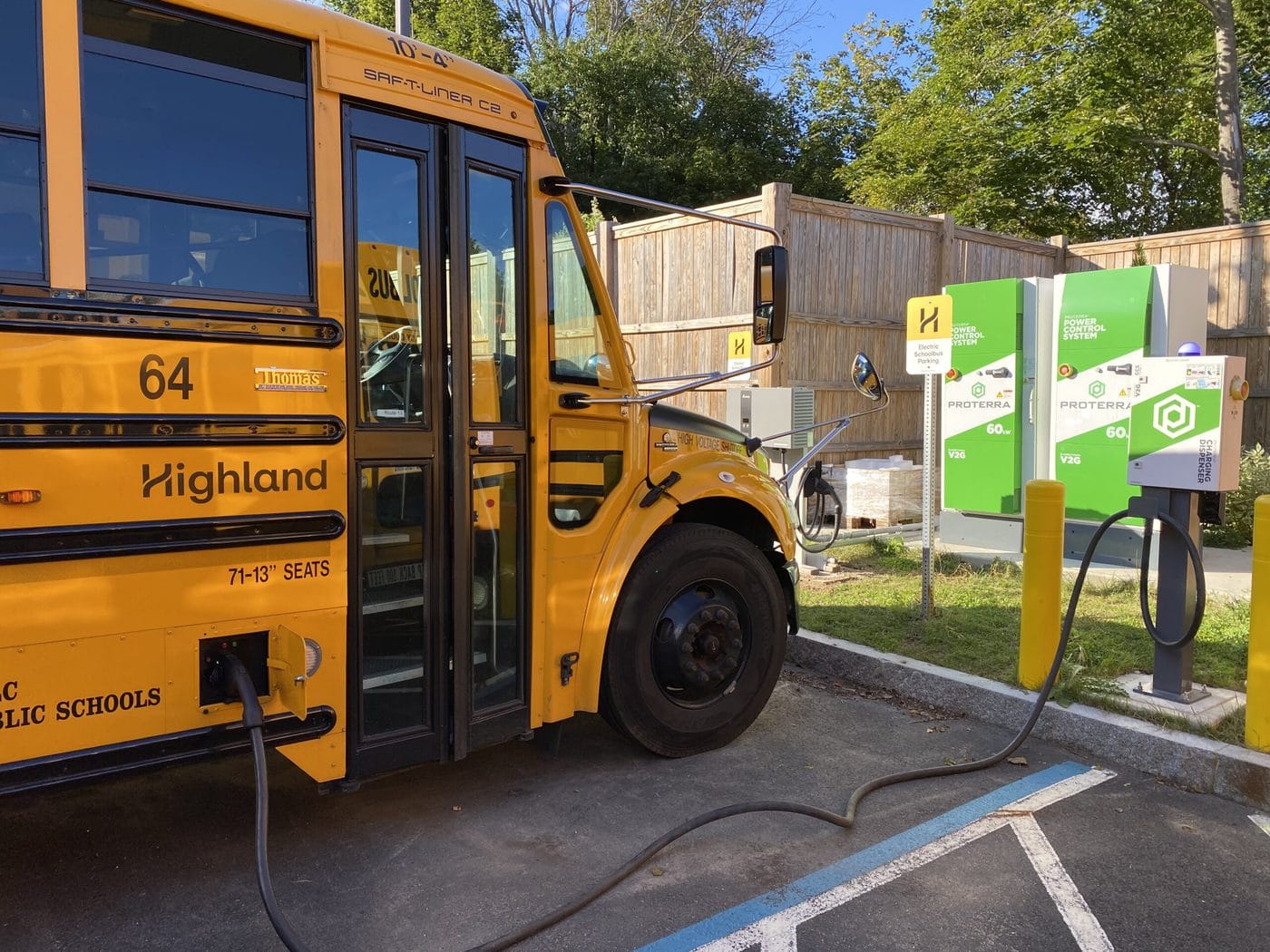
One of the many benefits of electric school buses is the opportunity for battery storage and grid balancing. Electric school buses equipped with vehicle-to-grid (V2G) capabilities, like the Thomas Built Buses Saf-T-Liner® C2 Jouley® electric school bus, are excellent battery storage units where unused power can be drawn from the school buses back into the energy grid during idle times – especially in the evenings, weekends and summer months. Utility companies across the country are poised to pay districts for the stored energy transferred back to the grid, which is estimated to total thousands of dollars in revenue per year per bus, depending on utility rates.
But, does it actually work? Absolutely.
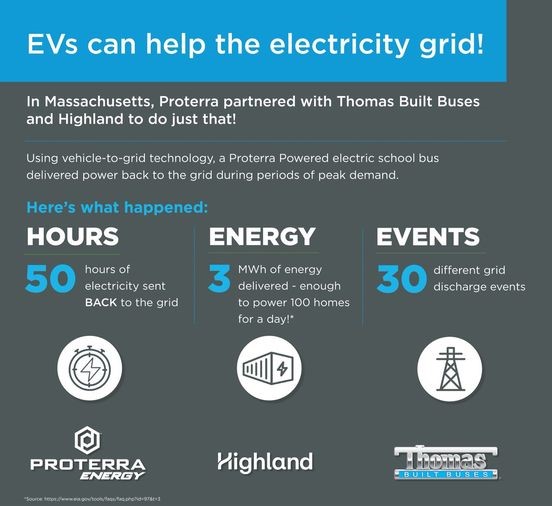
Just recently, Thomas Built Buses’ all-electric Saf-T-Liner C2 Jouley was part of a groundbreaking V2G transfer of clean energy in Beverly, MA, where it successfully delivered power back to the electricity grid for more than 50 hours over the course of 30 transfer sessions this past summer. This was the first time an electric school bus had been leveraged as an energy resource by the regional utility National Grid in New England and among the first of such instances in the United States when an electric school bus has supported the electric grid in this way.
This energy transfer program is just the first step to districts further lowering the total cost of ownership of their electric fleet with energy storage and transfer. You can read more about this groundbreaking initiative here.